Catholic Theological Union LogoCatholic Theological UnionLearn@CTUCatholics on CallCatholic Common Ground Initiative

Gaudete Sunday!

by Donald Senior, C.P. | December 13, 2015

SCRIPTURE REFLECTION FOR THE Third SUNDAY OF ADVENT (december 13, 2015)

Scripture Readings:
Zephaniah 3:14-18A
Isaiah 12:2-6
Philippians 4:4-7
Luke 3:10-18

The Scripture selections for this Advent Sunday capture the double-edged message of this compelling liturgical season: joyful hope and a call for renewal of life.

This third Sunday of Advent is traditionally called "Gaudete Sunday"-the Latin word "rejoice" taken from the opening lines of both the first and second readings today. In the first reading we have the exuberant message of the 6th century B.C. prophet Zephaniah. Zephaniah lived in tortuous times as Israel attempted to get out from under the violent oppression of the Assyrians who had subjugated Israel. With the coming of the new king Josiah and the apparent weakening of the Assyrian grip on their land, the prophet calls on the people to rejoice because God is about to deliver them from the scourge of their enemies.
That spirit of joy and praise also echoes throughout the Responsorial Psalm for today. The refrain calls for us to "Cry out with joy and gladness; for among you is the great and Holy One of Israel." The psalm verses themselves amplify this same message: "God indeed is my savior; I am confident and unafraid..." "Give thanks to the Lord, acclaim his name; among the nations make known his deeds, proclaim how exalted is his name..."
The second reading from Paul's letter to the Philippians also joins in the chorus of joy for this Sunday: "Brothers and sisters: Rejoice in the Lord always. I shall say it again: rejoice! The Lord is near. Have no anxiety at all, but in everything, by prayer and petition, with thanksgiving make your requests known to God..." Paul had a special love for the Christian community in Philippi and it shows in the uplifting spirit of this letter. This Macedonian city and Roman colony was the first Christian community that Paul had established on the landmass of Europe and he never forgot the hospitality and openness of the people he found there. In his letter to them, he also indicates that the Philippians reciprocated Paul's love and even supported his mission with their financial contributions.
The gospel brings another, perhaps more sober mood to ourSunday reflection. In Luke's version of the prophetic ministry of John the Baptist, we have a series of people-the crowds, tax collectors, and soldiers-ask a probing question that hangs in the air: "What should we do?" John's strong message that it was the time to repent and reform had struck home. John's answers reflect the teaching of Jesus, the Messiah whom John announced and who would follow in the Baptist's wake. If you have two cloaks, share with the person who has none. If you are a tax collector, don't cheat and try to collect more than is prescribed. If you are a soldier, don't use your power to extort people or falsely accuse them, and, by the way, be satisfied with your wages. Practical, direct answers to their question: "What should we do?"
What should WE do? What should we do who believe in Christ and his message of God's unconditional love for us and God's care for the vulnerable and the poor? What should we do at time when the world is alarmed at outbreaks of terrible violence and killing? What should we who live in Chicago (and in other cities with similar circumstances) when children are routinely being caught in the deadly crossfires that scar their neighborhood?
Some of us might be tempted to fight fear with our own brand of violence and fear: turn our backs on the victims of terror; scapegoat others; brand innocent people as suspicious or threats to our peace and security. In the face of so much confusion and complexity, others of us might choose to do nothing at all, but continue to live in a world indifferent to the sufferings of others.

The Scriptures today summon us to a different kind of response to the question: "what shall we do?" First of all, they remind us of the beauty and power of the Christian message. God is with us. Not a God of vengeance but a God of unconditional love, a God of reconciliation and peace, a God who has created human beings in his own image and likeness. So we believe in the sacredness and beauty of human life. We rejoice in this and give thanks to God for his infinite love for us as human beings who live in God's created world. We will not forget this or diminish it even in the face of those who have so profoundly lost their way and live out of hatred and fear and perpetrate violence on others. And, secondly, we are not afraid to ask ourselves the probing question that John's listeners dared to ask: "What shall we do?" How can we witness to our understanding of human life as sacred? How can we share some of our resources with those in need? How can I make sure I do not exploit or cheat another human being but treat them with respect and generosity? How can I support efforts to remove the conditions that foment violence? How, in short, can I live in such a way that I witness to my faith in a God of love and justice and my conviction that all human life is sacred?

Image: Third Sunday of Advent by Fuchur. Found on openclipart.org (Public Domain).
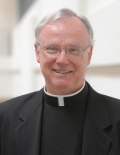
Author information Donald Senior, C.P.

President Emeritus, Professor of New Testament Studies

Donald Senior, C.P., holds a Licentiate in theology (S.T.L.) from the University of Louvain, Belgium and a Doctorate in New Testament Studies (S.T.D.) from the University of Louvain. He has pursued further graduate studies at Hebrew Union College, Cincinnati, Ohio and at Harvard University.

A frequent lecturer across the country, Fr. Senior also serves on numerous boards and commissions. He is past President of the Association of Theological Schools of the United States and Canada. In 2001, Pope John Paul II appointed him as a member of the Pontifical Biblical Commission and was reappointed in 2006 and 2008 by Pope Benedict XVI. He has been active in interreligious dialogue, particularly with the Jewish and Muslim communities.

Fr. Senior is the General Editor of The Bible Today and co-editor of the twenty-two volume international commentary series New Testament Message. He is the General Editor of The Catholic Study Bible (Oxford University Press, 1990). He has authored and edited several books and articles.

Donald Senior is a member of the following professional associations: The Catholic Biblical Association of America; The Society of Biblical Literature; Studiorum Novi Testamenti Societas; The Chicago Society of Biblical Research; The Catholic Theological Society of America; The International Association of Missiological Studies; Pax Christi International.

He is also a past president of CTU.

Tweet
© Copyright 2016 Catholic Theological Union. All rights reserved.
Site design and development by Symmetrical Design.