First Reading: ACTS 1:1-11
Responsorial Psalm: PS 42:2-3, 6-9
Second Reading: EPH 1:17-23
Gospel: LK 24:46-53
Today in the United States is "Mother's Day" and in the Church's liturgical calendar it is the Sunday on which most dioceses celebrate the feast of the Ascension. While the grateful remembrance of our mother's nourishing love needs little explanation, the meaning of the feast of Ascension may pose a bigger challenge.
Thinking about the Ascension takes me back to memories of a visit some years ago to the Cathedral of Chartres near Paris. This medieval Cathedral is perhaps the best preserved and most beautiful in all of Europe. Around the sanctuary is a chancel or choir screen that contains forty lovely carvings depicting gospels scenes. One of these portrays the Ascension, the feast we observe today. The scene is set inside a room with the apostles all gathered around a table -- they are all looking up at a pair of legs dangling from the ceiling! Jesus is on his way to heaven!!
I thought of the charm of this sculpture when considering the Scripture passages assigned for this great feast of the Ascension. The Evangelist Luke is the one who presents us with this dramatic conclusion to Jesus' earthly ministry, both at the end of his gospel (Luke 24:46-53) -- the gospel passage we hear today -- and at the beginning of the Acts of the Apostles (Acts 1:1-11), which is our first reading. Although both readings depict the same event, the account in Acts, which picks up the thread from Luke's Gospel, is more detailed. For forty days after his resurrection, the Risen Christ instructs his apostles in Jerusalem and equips them for their worldwide mission: "you will be my witnesses in Jerusalem, throughout Judea and Samaria, and to the ends of the earth"! Then in a dramatic moment, Jesus is lifted up into the clouds and out of their sight.
What is the meaning of this feast for the followers of Jesus? For one thing, by describing the ascent of Jesus to his Father in such vivid terms, Luke points to the ultimate destiny not just of Jesus -- but ours as well. Returning home to his Father was the true end point of Jesus' entire life and mission. For the sake of his mission of proclaiming the reign of God, Jesus had spent himself in healing and teaching, an outpouring of service that would ultimately cost him his life. But the gospel affirms that Jesus' life was not in vain. The end was not the bitter death of crucifixion but the transformative power of his resurrection that vindicated all of Jesus' teaching and healing. But beyond that, Luke's Gospel affirms, Jesus was lifted up into the embrace of his Father for all eternity. And that, our Christian faith proclaims, is also the destiny of all of us--we are not condemned to the cold stillness of an eternal death but are promised life unending in the loving embrace of God.
But there is something more about this feast of the Ascension, and it is communicated in that sculpture with the apostles looking at the ceiling, stunned by the departing figure of Jesus. The heavenly messengers who break into the scene Luke describes, ask the apostles: "Men of Galilee, why are you standing there looking at the sky?" The followers of Jesus are not supposed to stand around and wistfully look up to heaven. No, Jesus promises to send them the gift of the Spirit (the feast of Pentecost comes next week!) and that Spirit will drive them out into the world to proclaim the message of the gospel. More than any other New Testament book, Luke's Gospel and the Acts of the Apostles reflect on the expansive and dynamic power of the Spirit. The Spirit we receive in baptism is a generous and inclusive spirit that pushes the followers of Jesus to bring the message of the gospel to the whole world. We are not to be huddled in a room afraid of or indifferent to the world around us. Pope Francis' comment in his beautiful exhortation The Joy of the Gospel comes to mind: we are not to think of ourselves simply as "disciples" of Jesus but as "missionary disciples" -- empowered by the Spirit of God to love, serve, and transform our world. Come to think of it...that is something my mother would say: "Don't just stand around, get to work!"
[This reflection is adapted with permission from the regular column on the Sunday readings that I prepare each week for The Catholic New World, the official newspaper of the Archdiocese of Chicago. Donald Senior, C.P.]


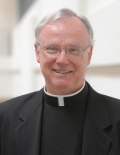 Donald Senior, C.P.