
Trouble... Yet Trusting


Scripture Reflection for the SEVENTEENTH SUNDAY IN ORDINARY TIME (July 28, 2013)
Scricpture Readings:
Genesis 18:20-32
Psalm 138
Colossians 2:12-14
Luke 11:1-13
I have to admit I have a lot of trouble with the first reading and with the gospel today. These readings make prayer sound so easy. All you have to do is to ask God for something, and God will simply give you what you ask for. “Lord, on the day I called for help, you answered me.” “Ask and you will receive; seek and you will find; knock and the door will be opened to you.”
Sure, many times I have called for help and God has answered me, sustained me, sent me someone who helped me bear my burden. Many times I have asked and have received, sought and found, knocked and the door opened—in times of frustration and despair, before a dangerous surgery, for safety on a trip, for healing for a friend or a loved one. But how many times have I also called, asked, sought and knocked and nothing happened? Friends with cancer have died despite my prayer. Soldiers and innocent people keep dying in Iraq and Afghanistan. I keep giving in to pride, dishonesty, lust.
It must be much more complex than just asking and receiving, seeking and finding, knocking and entering—and I think that is Jesus’ point in this rich discourse on prayer that Luke presents to us. God is not a kind of machine that is at our beck and call. We certainly have things we want, but God knows what we need. This is perhaps why the prayer that Jesus gives us—what we call the “Lord’s Prayer”—is so powerful. It is not really about getting any specific thing. It is about opening up to God’s vision and God’s will, about opening up to the world that God is creating, allowing ourselves to become partners in the creation of that world. It is about asking for the Holy Spirit, who will clarify our minds and hearts.
Once we understand that God is absolutely on our side, we can pray with the boldness of Abraham, pressing God for more than we have a right to hope for. We can “wake God up” anytime, or for any reason. Once we understand that God is absolutely on our side, we will realize that God does not give us the appearance of good things—snakes that only look like fish, or scorpions that only look like eggs—but the real thing.I still have a hard time with these readings. I still don’t know why sometimes my prayers are answered, and some times they are not—or at least don’t seem to be. What I think I am called to today, though, is to trust that the God who has so utterly changed me in baptism—who has raised me up with Christ, who has forgiven me so much, who has nailed my sinfulness to Christ’s cross—is a God who is active in my life and care about what I want and what I need. I might not always understand how this works, but I will keep trying to say, as Jesus taught me, “thy kingdom come; thy will be done; give us this day our daily bread; forgive us; deliver us.”
Image: iStock
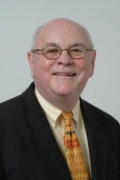 Stephen Bevans, SVD
Stephen Bevans is currently Louis J. Luzbetak, S.V.D., Professor of Mission and Culture at Catholic Theological Union, Chicago, USA and the Faculty Moderator for Catholics on Call. He is a Roman Catholic priest in the Society of the Divine Word, an international missionary congregation, and served for nine years (1972-1981) as a missionary in the Philippines.
His publications include: Models of Contextual Theology (2002), Constants in Context: A Theology of Mission for Today (2004, with Roger Schroeder), Evangelization and Freedom (2009, with Jeffrey Gros), and Introduction to Theology in Global Perspective (2009).
He is past president of the American Society of Missiology (2006) and past member of the board of directors of the Catholic Theological Society of America (2007-2009). In 2009 he was visiting lecturer at Yarra Theological Union in Melbourne, Australia, and in the fall of 2009 he served as Scholar in Residence at the Crowther Center of mission studies at the headquarters of the Church Missionary Society in Oxford.