
Becoming A Person of Prayer: Part III


Most of us like to be in control in our lives. And surely we need a certain amount of control to live in a healthy way. If we don’t take some control over our calendars, for example, we can end up overextending ourselves and not meeting our primary responsibilities. I like to get up each morning, check my calendar and make my list of things that have to be done that day. The more orderly that list is, the better. Quite often, however, my well-ordered day is turned upside down by interruptions. And sometimes I look back and discover that the interruptions were the most significant part of that day.
Staying in control in our relationships is an even more complex matter. To have appropriate expectations of others is a healthy thing. And there are personal boundaries that should be maintained in the various kinds of relationships we have with others. But an excessive need for control can prevent us from genuinely sharing ourselves with the people who are important to us and thus from growing in friendship with them. That same thirst for control can drive people away if we begin to try to manage their lives for them. Something similar can happen in our relationship with God. Our desire to be in complete control of our lives can hinder us from opening our hearts and minds to God in prayer.
In this series on prayer, I have been building on some of the ideas articulated by Bishop Robert Morneau in essay “Principles of Prayer” (Spiritual Direction: Principles and Practices, Crossroad, 1996). One of the principles that he discusses is this one: “God’s activity in prayer is more important than our activity.” Many of the spiritual masters have reflected on this principle through the centuries. Julian of Norwich, a great 14th century English woman of prayer, wrote that God was the ground of her beseeching. In her prayer she came to the realization that it was God Himself who was moving her to seek Him in the first place. Even the desire to pray is already a result of God’s presence and action in our lives, drawing us closer to union with God. Saint Paul of the Cross, the founder of the Passionist community put it like this in a letter he wrote to a person seeking his advice about prayer: “Prayer is not to be made in our mode, but as the Holy Spirit wishes.”
All of this means that part of our prayer time needs to be given over to listening -- listening to the subtle movements of the Spirit of God at work within us. This can sound “weird” at first, almost as if we were expecting to hear voices coming out of the walls of our rooms. But if prayer involves a dialogue with God, it needs to include quiet listening as well as speaking to God. And God does have ways of communicating with us. God may speak to us through a Scripture passage that we read or which comes to us in our memory. Did you ever have that experience of hearing a Scripture text for the 100th time, but really hearing it again for the first time? As if it were spoken directly to you? God may speak to us through a sense of interior peace that we experience, perhaps in a time of external turmoil. God sometimes speaks to us through a good idea or a sense of the direction we need to take in our lives at a particular moment. And, of course, God speaks to us in the words of other people in our lives, words we often need to take time to recall and reflect upon.
In prayer, there are two who are active: ourselves and God. In order to become attuned to the action of God, it is important that we integrate some time of quiet listening into our time of prayer. In that listening we will sometimes experience that God speaks to us in God’s own subtle, mysterious way. At other times, that time will consist simply of a mutual presence to: our presence to God and God’s presence to us. Like two good friends who can just sit together on a park bench without exchanging a lot of words. That in itself is a marvelous gift.
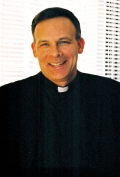 Robin Ryan, C.P.
Robin Ryan, C.P., taught systematic theology at Catholic Theological Union from 2004-2010. He was elected Vicar Provincial of his religious congregation (the Passionist community) in May 2010. He earned his Ph.D. from the Catholic University of America. Prior to coming to CTU, he taught theology at Saint John's Seminary in Boston for nine years. During his time at CTU, he also served as the founding director of Catholics on Call, a national vocation discovery program for young adults. He is the author of a number of essays on God and human suffering, young adults and the Church, Christology, and ecclesiology. He is the editor and co-author of Catholics on Call: Discerning a Life of Service in the Church (Liturgical Press, 2010). He is also the author of the book God and Suffering: A Theological Conversation Through the Ages (Paulist Press, 2011).