
Becoming A Person of Prayer: Part II


In our “last episode” of this series on becoming a person of prayer, we listened to the description of prayer given by Bishop Robert Morneau. In his article “Principles of Prayer,” Bishop Morneau tells us that prayer is essentially loving attention (Spiritual Direction: Principles and Practices, Crossroad, 1996). Morneau then offers us a second, very important, principle of prayer. As he puts it, “In prayer, I must bring this me to the living God.”
What’s so insightful about that? Surely I can’t bring “another me” to God in prayer. Or can I? Sometimes we don’t like ourselves very much. That may be because life experiences have led us to develop a negative self-image. Perhaps constant criticism by others has reinforced that negativity. We may be unable to affirm the goodness within ourselves and accept our limitations. And so we find it difficult to share with anyone, even with God, who we really are. Or we may feel badly about some of the things we have done in the past and are afraid to bring them before God. We think that we can bring ourselves to the living God only after we have taken care of our problems.
We also tend to wear a lot of masks in our lives. We don the “have-it-all-together mask” in order to impress others, succeed in the business and social world, and cover up our limitations and weaknesses. We put on the “party animal mask” so that we can convince others that we like to have a good time as much as the next person. We can even wear the “spiritual mask” when we want to look pious or holy in front of others.
It is true that we all have certain roles to fulfill in our lives. But none of those roles defines who we are. God is the One who knows us better than we know ourselves. In order to become a person of prayer, it is important that we speak to the Lord as honestly as we can about where we are in our lives. We need to talk to God about what we hope for and what it is we may be struggling with. We need to share our joys and successes with God, as well as our sadness, failures, and confusion. As Bishop Morneau reminds us, in order to become a person of prayer, I need to come before the Lord as I am right now. Not as I was when I was a child; not as I hope to be in the future when I get my life together; but as I am right now, right here.
The Bible supports this important principle. Grab a Bible sometime and page through the Book of Psalms in the Old Testament. There are 150 of them, and they represent the “official prayer book” of the Hebrew people. Jesus made the Psalms his own book of prayer. When we look at those prayers, we find represented there the whole range of human emotions -- from joy, praise and thanksgiving, to anger, frustration, jealousy, and confusion. This tells us something so important about prayer. For the Hebrew people the living God was so real to them, so much a part of their everyday lives, that they knew they could bring everything to God. In fact, they seem to have realized that they should bring everything to God. And that is the way in which God remained real to them, and their relationship with God grew and deepened.
I know that in my own life there are days in which I don’t really want to “bring this me to the living God.” There are moments when I don’t like myself very much. There are other days in which I am not too eager to share what’s going on inside of me with anyone, even God. But I know that when I do bring myself before the living God as I am, good things happen. God’s presence in my life becomes more real to me. God’s grace enables me to see my life in a different light and recognize new possibilities. God’s acceptance and love help me to realize my dignity in His eyes and to live from that dignity.
Sometime today, take the time to bring yourself before the living God just as you are.
Image: iStock
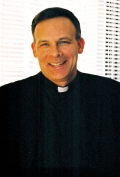 Robin Ryan, C.P.
Robin Ryan, C.P., taught systematic theology at Catholic Theological Union from 2004-2010. He was elected Vicar Provincial of his religious congregation (the Passionist community) in May 2010. He earned his Ph.D. from the Catholic University of America. Prior to coming to CTU, he taught theology at Saint John's Seminary in Boston for nine years. During his time at CTU, he also served as the founding director of Catholics on Call, a national vocation discovery program for young adults. He is the author of a number of essays on God and human suffering, young adults and the Church, Christology, and ecclesiology. He is the editor and co-author of Catholics on Call: Discerning a Life of Service in the Church (Liturgical Press, 2010). He is also the author of the book God and Suffering: A Theological Conversation Through the Ages (Paulist Press, 2011).