
Week 5: Faith and DOUBT

When you think about it, there is never absolute certainty about the decisions that we make in life. In fact, the graver the decision, the more important the decision—to be ordained, to take perpetual vows, to marry this one woman or man—the more risk we take. So in faith, the whole meaning of our life depends on our continued decision to accept God’s truth fully, to trust in God’s leading, to conform ourselves with the demands of the gospel.
The great twentieth century theologian Paul Tillich wrote powerfully on the presence of doubt in faith and insists that the element of certainty in the act of faith cannot be removed—“it must,” says Tillich, “must be accepted.” Tillich explains that the doubt connected with every act of faith is an existential doubt. It “is the doubt that accompanies every risk. It is not the permanent doubt of the scientist, and it is not the transitory doubt of the skeptic, but it is the doubt of [the one] who is ultimately concerned.” Ruth Gendler, in her Book of Qualities writes lyrically of the connection between faith and doubt:
Faith lives in the same apartment building as Doubt. When Faith was out of town visiting her uncle in the hospital, Doubt fed the cat and watered the asparagus fern. Faith is comfortable with Doubt because she grew up with him. Their mothers are cousins. Faith is not dogmatic about her beliefs like some of her relatives. Her friends fear that Faith is a bit stupid. They whisper that she is naïve and she depends on Doubt to protect her from the meanness of life. In fact, it is the other way around. It is Faith who protects Doubt from cynicism.
One of the great prayers in the Bible is what the man with the possessed boy says to Jesus: “Lord, I believe. Help my unbelief!” (Mark 9:24).
Questions for Reflection
- When have I really struggled with my faith, and even doubted?
- Why do you think that doubt is a good thing in faith, that “must be accepted.”
- Why do you think that “Faith protects Doubt from cynicism”?
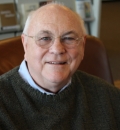 Stephen Bevans, SVD
Steve Bevans is Professor Emeritus at Catholic Theological Union and the Faculty Moderator for Catholics on Call. He is a Roman Catholic priest in the Society of the Divine Word, an international missionary congregation, and served for nine years (1972-1981) as a missionary in the Philippines.
His publications include: Models of Contextual Theology (2002), Constants in Context: A Theology of Mission for Today (2004, with Roger Schroeder), Evangelization and Freedom (2009, with Jeffrey Gros), and Introduction to Theology in Global Perspective (2009).
He is past president of the American Society of Missiology (2006) and past member of the board of directors of the Catholic Theological Society of America (2007-2009). In 2009 he was visiting lecturer at Yarra Theological Union in Melbourne, Australia, and in 2013 he was the only Catholic to speak at a Plenary at the Tenth Assembly of the World Council of Churches in Busan, Korea.