
Week 6: Faith and REASON
A second extreme is that of fideism, or the conviction that one must not even look for reasons for making the act of faith. This was wonderfully expressed by the father of one of my students who, when told that his daughter was learning that theology was “faith seeking understanding,” exclaimed: “But faith doesn’t have to seek understanding—that’s why they call it faith!” Centuries before, the early Christian theologian Tertullian said much the same thing when he said about faith in the resurrection: “I believe because it is absurd!” Today, fideism expresses itself among fundamentalist Christians. These are often Protestant evangelicals and Pentecostals, but we Catholics have fundamentalists too among those who believe unquestioningly “because the Bible says so,” or because “the Pope says so.” One of the dangers of this year of faith would be limit our understanding of faithfulness to a strict interpretation and even mere repetition of the Catechism of the Catholic Church.
The true Catholic position, as I have indicted before, is in the conviction that reason has a real role to play in our lives of faith. This was the position of Thomas Aquinas, and, as I quoted him above, St. Augustine, when he wrote that he believed in order to understand, but that he also sought understanding so as to better believe. As the letter of Peter in the New Testament challenges us, we must always be ready to give a “reason for our hope” (1Pet 3:15). Balancing faith and reason is one of the great accomplishments of the great theologian Thomas Aquinas, and is the name of one of John Paul II’s best encyclicals: Faith and Reason. He speaks of both of them as the two wings by which faith takes flight.
Questions for Reflection
1. What is easier for me—trying to find certainty, or believing without reasons? Why are both unworthy of faith?
2. Who do I know is a “rationalist”? Who do I know is a “fideist”?
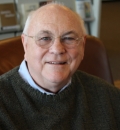 Stephen Bevans, SVD
Steve Bevans is Professor Emeritus at Catholic Theological Union and the Faculty Moderator for Catholics on Call. He is a Roman Catholic priest in the Society of the Divine Word, an international missionary congregation, and served for nine years (1972-1981) as a missionary in the Philippines.
His publications include: Models of Contextual Theology (2002), Constants in Context: A Theology of Mission for Today (2004, with Roger Schroeder), Evangelization and Freedom (2009, with Jeffrey Gros), and Introduction to Theology in Global Perspective (2009).
He is past president of the American Society of Missiology (2006) and past member of the board of directors of the Catholic Theological Society of America (2007-2009). In 2009 he was visiting lecturer at Yarra Theological Union in Melbourne, Australia, and in 2013 he was the only Catholic to speak at a Plenary at the Tenth Assembly of the World Council of Churches in Busan, Korea.