
Holy Week In Our Lives


SCRIPTURE REFLECTION FOR PALM SUNDAY OF THE LORD’S PASSION (March 29, 2015)
Scripture Readings:
Mark 11:1-10 (gospel read before the procession)
Isaiah 50: 4-7
Psalm 22:8-9, 17-18, 19-20, 23-24
Philippians 2:6-11
Mark 14:1-15:47
There seems to be kind of a clash between today’s first reading and today’s responsorial psalm. The reading from Isaiah is so noble, so calm. We cannot but think of the quiet dignity that Jesus exhibits during his passion, particularly in the account that we read from the gospel of Mark today. The servant of God does not rebel. He does not turn back. He allows himself to be abused, setting his face like flint, confident that he will not be put to shame.
By contrast, the responsorial psalm is filled with anxiety and fear. We cry out with the psalmist and with Jesus: “My God, my God, why have you abandoned me?” We see his persecutors wag their heads in mockery and hear them say “he relied on God, so let God deliver him!” We hear the servant and Jesus say how he is surrounded like a pack of wild dogs, how his enemies divide his garments among them, having stripped him of them. Where’s the nobility and calmness in that?
And yet, as the psalm reaches a conclusion, we hear the servant/Jesus cry out once more in faith: “I will proclaim your name to my sisters and brothers in the midst of the assembly.” It seems like the servant’s/Jesus’s trust has been justified.
That this is so is confirmed by the second reading, that magnificent early hymn quoted by Paul in the letter to the Philippians. Jesus was obedient to death—even to the most shameful of all deaths in his day, death on a cross. But God exalted him, giving him a name above all names. Jesus emptied himself, trusting that God would fill that emptiness. And we know that God did.
This is how we need to read and meditate on the passion narrative of Mark today, and all the events of this Holy Week as well. Mark’s passion is a story of betrayal, of abuse, of suffering, and of death. But we know that it does not end that way. During this coming week we focus on those horrible scenes of Jesus’ betrayal and passion, but always with the confidence of the servant in our first reading: that God did not and could not abandon him. Every Holy Week contains the cross, but every Holy Week ends with resurrection. In this week we see the depth of God’s love: that Jesus would die for us even when we were yet sinners, as Paul said so beautifully. And we see the depth as well of God’s trustworthiness: that God actually did not abandon his servant Jesus.
In the same way, this is how we have to read and meditate on the events of our lives. We all have our passion narratives, our Holy Weeks—betrayals, uncertainties, abusive people in our lives, people who “wag their heads” or “pluck our beards.” We all struggle with fear of relationships or decisions, a fear that can suck out the very life from our lives. But as Isaiah, Psalm 22, Philippians, and Holy Week teach us today, these death-dealing moments in our lives don’t have to be the final word. Jesus’ story this week is our story. His Holy Week illumines the Holy Weeks of our lives. His confidence can be our confidence. His love can draw us to new and unexpected life. Like him, we are called this Holy Week to empty ourselves, trusting that his name is indeed the name above all names, and that his glory can be ours as well.
Image: Palm Cross by Colin Paterson. Found on Flickr under a Creative Commons License.
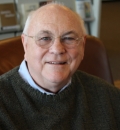 Stephen Bevans, SVD
Stephen Bevans is currently Louis J. Luzbetak, S.V.D., Professor of Mission and Culture at Catholic Theological Union, Chicago, USA and the Faculty Moderator for Catholics on Call. He is a Roman Catholic priest in the Society of the Divine Word, an international missionary congregation, and served for nine years (1972-1981) as a missionary in the Philippines.
His publications include: Models of Contextual Theology (2002), Constants in Context: A Theology of Mission for Today (2004, with Roger Schroeder), Evangelization and Freedom (2009, with Jeffrey Gros), and Introduction to Theology in Global Perspective (2009).
He is past president of the American Society of Missiology (2006) and past member of the board of directors of the Catholic Theological Society of America (2007-2009). In 2009 he was visiting lecturer at Yarra Theological Union in Melbourne, Australia, and in 2013 he was the only Catholic to speak at a Plenary at the Tenth Assembly of the World Council of Churches in Busan, Korea.