Mercy without Boundaries
Scripture Reflection for the Twentieth Sunday in Ordinary Time (Sunday, August 14, 2011)
Isaiah 56:1, 6-7
Psalm 67
Romans 11:13-15, 29-32
Matthew 15:21-28
For most of their history, the biblical peoples wrestled with the tension between their unique identity as God's chosen people and their relationship to the wider world of the "nations" - the peoples and cultures that surrounded them. One thing was always clear: the God they worshipped as the "God of Israel" was no mere tribal god, but was also the "God of the Nations" as well. That tension between identity and outreach, between the needs of one's own family and community and one's obligations to the wider world runs through the biblical readings for this coming Sunday, August 14.
The passage from Isaiah 56:1-7 speaks positively of the "foreigners" who are just and good people, those "who join themselves to the Lord". They will have a place on the holy mountain - Mt Sion, the heart of Israel and the location of God's temple in Jerusalem. This great prophet of Israel proclaims that the sacrifices of these pagan peoples are acceptable to God and therefore the temple will be called "a house of prayer for all nations." Several times in the latter part of Isaiah's writings there is this sense of universality, of the boundaries of God's mercy extending beyond the borders of Israel to all people of good will. Paul the apostle would be deeply influenced by these grand visions of Isaiah such as the passage in Isaiah 49 where God tells the prophet that Israel is to be a "light to the nations" and that the prophet himself was set apart before he was even conceived in his mother's womb to proclaim this message of salvation (see Paul's allusion to Isaiah 49:5-6 in his letter to the Galatians 1:15-6 where he explains his own vocation as a missionary to the Gentiles).
We hear from Paul himself in a remarkable passage from his letter to the Romans (11:13-15, 29, 32). This selection comes at the end of a crucial part of Paul's letter where he has been wrestling with the question of the ultimate fate of Israel and the Gentiles. Last Sunday we heard from the opening part of this section (Romans 91-5) where Paul introduces his wrestling with this question with an extraordinary burst of anxiety. Paul laments the fact that his Jewish kin - whom he loves and identifies with - have not acclaimed Jesus as the Messiah in the way Paul had. In his enthusiasm and passionate love of Christ, Paul had assumed that all the Jews would likewise believe in Jesus as the Christ and Son of God. But, although many of his fellow Jews did follow Jesus, it was now clear to Paul that Israel as a whole had not. Yet, at the same time, increasing numbers of Gentiles were accepting the message of the Gospel. How could this be so, Paul asks. In his torment over this turn of events, Paul says he was even willing to forfeit his own faith in Jesus if it would cause his fellow Jews to believe in Jesus-an astounding statement of Paul that shows the depth of his feeling about this dilemma (see Romans 9:3).
In the passage from Romans for this Sunday we hear Paul at the conclusion of his wrestling with this question. Throughout the preceding two chapters of his letter, he had tried to figure out the reason why God would open the doors of salvation to the Gentiles but could not persuade Israel itself to come in! Paul ends his soliloquy in a beautiful way. He wonders out loud if God has drawn in the Gentiles first in order to make his own Jewish people "jealous" and then they would come in, too! But then Paul comes to the foundational principle that he knows will guide the future no matter what: "For the gifts and the call of God are irrevocable." Therefore God will never abandon his own people. And to this Paul adds one more fundamental conviction: the motive for all of God's actions in history-however mysterious and inexplicable to us-is God's mercy. Thus, God cares not only for Israel but for the nations, too.
This same motif is found in the provocative gospel story of Jesus' encounter with the Canaanite woman in Matthew 15:21-28. Matthew's Gospel emphasizes the fact that Jesus, during his lifetime, restricted his messianic mission exclusively to God's people Israel. Jesus even explicitly instructs his disciples to confine their mission "only to the lost sheep of the house of Israel" (Matthew 10:6)-a restriction repeated in the passage we hear today: "I was sent only to the lost sheep of the house of Israel" (15:24). Here we have in dramatic form the tension we spoke of earlier. On the one side is Jesus, faithful Jew and obedient Son of God, sent to be the savior of God's people Israel. On the other side is a Gentile woman, a mother of a desperately ill child, pleading with Jesus for healing. Jesus at first rebuffs the woman's cries for help: ignoring her and reaffirming the boundaries of his mission. But ultimately her determination and steadfast faith break through the frontiers of Jesus' mission and claim his healing mercy. "Woman, great is your faith!"
One senses that on display here is a dilemma felt by Matthew's Jewish Christian community. They, too, were concerned about their own people and believed that their primary mission and responsibility was for their Jewish brothers and sisters. In this story they hear their own views at first echoed in Jesus' own responses but then, under the impact of the woman's faith and her determination on behalf of her sick daughter, they see that Jesus reaches beyond the boundaries and offers healing and mercy. No longer was Jesus' mission restricted only to the "lost sheep of the house of Israel"-now it reached to the nations.
All of these readings today touch on a fundamental current of our Scriptures: God's mercy knows no bounds and we, who are called to follow Christ, must open our horizons as well. Boundaries surely have an important role to play: as individuals we have to have confidence in our own identity in order to reach out to others. As Christians we have to be aware of our own essential values and commitments as we seek to serve those beyond the boundaries of our faith. As a country, too, we have to attend to our own vital needs but we cannot cut ourselves off from our relationship to the wider world and to the human family as a whole. In times of tension and concern about the future, we are prone to turn inward and worry only about our own needs. The Scriptures for this Sunday remind us that to be truly Christian we cannot abandon our responsibility to the wider world. Reports of violent conflicts between religious groups or the heartrending images of famine in Somalia remind us that our God is a "God of the Nations" and as daughters and sons of the God proclaimed by Jesus, we cannot be content with prejudice or indifference but are called to respond to the needs and hopes of our world.
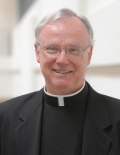 Donald Senior, C.P.
President Emeritus, Chancellor, Professor of New Testament Studies
Donald Senior, C.P., holds a Licentiate in theology (S.T.L.) from the University of Louvain, Belgium and a Doctorate in New Testament Studies (S.T.D.) from the University of Louvain. He has pursued further graduate studies at Hebrew Union College, Cincinnati, Ohio and at Harvard University. Fr. Senior served as President of CTU for 23 years, retiring in July 2013. On April 27, 2015, he was named Chancellor by the CTU Board of Trustees.
A frequent lecturer across the country, Fr. Senior also serves on numerous boards and commissions. He is past President of the Association of Theological Schools of the United States and Canada. In 2001, Pope John Paul II appointed him as a member of the Pontifical Biblical Commission and was reappointed in 2006 and 2008 by Pope Benedict XVI. He has been active in interreligious dialogue, particularly with the Jewish and Muslim communities.
Fr. Senior is the General Editor of The Bible Today and co-editor of the twenty-two volume international commentary series New Testament Message. He is the General Editor of The Catholic Study Bible (Oxford University Press, 1990). He has authored and edited several books and articles.
Donald Senior is a member of the following professional associations: The Catholic Biblical Association of America; The Society of Biblical Literature; Studiorum Novi Testamenti Societas; The Chicago Society of Biblical Research; The Catholic Theological Society of America; The International Association of Missiological Studies; Pax Christi International.
He has served as an official representative to the Southern Baptist/Roman Catholic Scholars Dialogue, sponsored jointly by the National Conference of Catholic Bishops and the Southern Baptist Convention. Fr. Senior just recently ended his term as President of the Association of Theological Schools of the United States and Canada. He is a member of the Board of Directors for Sadlier Publishing Company; the Board of Advisors of the Auburn Center for Theological Education; and the Advisory Committee of the Henry Luce III Fellowship program; and serves on the Executive Committee of the Association of Theological Schools of the United States and Canada. In 1994 he was awarded the Jerome Award for outstanding scholarship by the Catholic Library Association of America. In 1996, the National Catholic Education Association awarded him the Bishop Loras Lane Award for his outstanding contribution to theological education. He is a past President of the Catholic Biblical Association of America (1997-98).