
"I also have to do something" - A Reflection from a Christian Base Community in Nicaragua
"I also have to do something" - A Reflection from a Christian Base Community in Nicaragua
"I have a lot of faith in God so I pray that God will keep this project going. But I can’t just pray; I also have to do something.” Doña Socorro, the woman who shared with me this insight, is the coordinator of a daycare for children of low-income parents who work outside the home. The project is one of many carried out by a Christian base community in Nicaragua. In addition to providing childcare from 6:30am – 6pm five days a week, the nursery also feeds the children a nutritious meal and provides education. Were it not for this project, these children would either stay at home alone or go with their parents to work every day.
The Christian base community also carries out other projects, including visitation of the sick, catechesis for children, a youth group, Bible study for adults, a disability rights organization, a legal clinic and a Women’s Collective which helps educate both men and women about domestic violence issues. Made up of almost exclusively women, this rather impressive community conducts religious services every Friday and due to the scarcity of ordained priests, celebrates Mass together once a month. With the poor global economy, the community is struggling financially to keep their projects up and running. Some projects have already shut down due to lack of funding, but the women have faith that they will somehow survive. At the daycare, the staff cut their salaries and now work for free so that the only expense incurred is buying food for the children.
I recall Jesus’ Sermon on the Mount as Doña Socorro talks about the projects of the Christian base community. It struck me that this small but mighty group performs nearly every one of the corporal works of mercy and truly lives out the Beatitudes as Jesus taught.
Yet the community doesn’t simply perform on-going acts of charity. They also work to eliminate the root causes of some of the social injustices people experience. Doña Socorro informed me that due to the work of the Women’s Collective to educate the men and women of the neighborhood about domestic violence, the barrio is now “liberated”: men no longer hit their wives. As Doña Socorro put it, “If you [men] can hit, we [women] can learn to hit, too.” They have taken literally the biblical reference an “eye for eye, tooth for tooth” (Exodus 21:24), not something I would have interpreted literally (I may have gone with Jesus’ teaching in Matthew 5:39), but in this case has been effective in stamping out an oppressive practice.
I (as I would imagine many other Christians) sometimes become jaded when I hear preaching to act in a Christian way, to love one’s neighbor, to serve God, yet I see many Christians (myself included) failing to live up to the example Jesus set for us. But this community gave me hope. It stands out as a clear, concrete example of what Jesus was talking about when he told us to go out and not only preach the Good News, but to live it daily. This Christian base community became for me a very concrete, vivid model of the Church being both a pastoral and prophetic presence striving to create the Kindom of God.
Ann Marie Castleman
(Photos by Allison Hays)
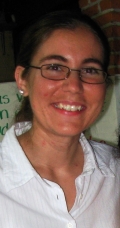 Ann Marie Castleman
Ann Marie Castleman was a 2009 Catholics on Call participant. She has a degree in theology from Xavier University and a master's in public health from the University of Minnesota. She lives in Managua, Nicaragua.