The Field is the World


Scripture Reflection for the Sixteenth Sunday in Ordinary Time (July 17, 2011)
Scripture Readings:
Wisdom 12:13, 16-19
Psalm 86
Romans 8:26-27
Matthew 13:24-43 or 13:24-30
Some years ago when I was a graduate student at the University of Louvain in Belgium, my friends and I used to take the ferry across the English Channel (no “chunnel” yet!) to London to purchase books which were especially inexpensive in Britain at that time. Once I was examining a whole table of used books that were displayed in front of Blackwells, the famed bookstore in Oxford, when I spied a leather bound copy of a book by J. C. Hawkins, entitled Horae Synopticae. It was a learned tome on the so-called “synoptic problem” and the kind of book that only a Ph.D. student in theology could get excited about!
I purchased it for a pound (a steal!) and on the way back to Belgium opened the book to discover that on the inside cover the previously owner had written a brief Greek phrase: ho de afros estin ho kosmos – “The field is the world.” I could understand the Greek but could not place the quote—thinking it must be from one of the classic poets. Only later—and to my embarrassment—did I discover that it is a saying of Jesus from the Gospel of Matthew (13:38)! That intriguing phrase, in fact, is in the gospel assigned for this Sunday’s reading.
Jesus tells his disciples the parable of the wheat and the weeds. A householder’s servants discover that an enemy had sowed weeds among the good seed of their master’s field. They ask if they should pull up the weeds but the master orders them to leave everything until the harvest, lest in taking out the weeds they also harm the wheat. Later, Jesus’ disciples ask him the meaning of this parable. He begins by setting the stage for the meaning of this story: “the field is the world.”
That phrase has been a guide for me for many years. In Jesus’ mind the “field”—that is, the place where God’s good seed is sown and therefore the object of the Christian mission, is not simply Israel or the Church or some protected and enclosed area, but the “world” itself, a mixed world of good and bad. Matthew’s Gospel has other parables like this, such as the parable of the net (13:47-50) which catches all sorts of fish, good and bad which will be sorted out by God only at the end of time. In other words, our responsibility as people of faith who believe in Jesus and the beauty and strength of his message is to be of service to our fellow human beings whether Christian or not, whether in the Church or out, whether good or indifferent or bad.
All of us can be tempted to turn inward and deal just with our “own kind” and our own concerns—and we may have plenty of those to worry about. But the words of Jesus challenge us to look outside ourselves and take responsibility for the world around us. At the end of the Eucharist we are challenged “to go…in the peace of Christ.” I heard a pastor a few Sundays ago say, “The most important sign in our Church is the exit sign!” The Eucharist is our nourishment to enable us to take gospel out of the Church building and into the world.
There are two other parables tucked into this Sunday’s gospel reading and they introduce another forceful message. We hear Jesus compare God’s reign to the tiny mustard seed that, once planted, grows into the “largest of plants” where the birds come and dwell in its branches. Or the Kingdom of God is like yeast that a woman kneads into three measures of flour and the batch swells. This, too, is a consistent theme of Jesus’ preaching: what seems small and insignificant has the power, through God’s grace, to grow into abundance.
In several of Jesus stories there are great harvests and discoveries of great treasure or very valuable pearls. No one could accuse Jesus of being naïve about human suffering and human treachery as well. He was a healer, accustomed to being near to people in pain and he was constantly opposed by others and would ultimately be taken to his death by those hostile to him. Yet Jesus—like so many great Christians who would follow him down the centuries—maintained enduring hope—not because of blind optimism—but because of a tenacious trust in a God of goodness and life, over whom no evil could ultimately triumph.
This motif is clearly present in the brief selection from the Letter to the Romans that is also part of this Sunday’s repertoire. In one of the most eloquent sections of Paul’s writings (it is good to read the whole of chapter 8 to catch its beauty), the apostle speaks of God’s Spirit interceding for us with “inexpressible groanings.” We ourselves are admittedly weak (a tiny seed; a bit of yeast; a field of weeds and wheat) but God is with us, even in our limits and sufferings, even as we hardly know how to pray. As Paul will end this section of his letter: “For I am convinced that neither death, nor life, nor angels, nor principalities, nor present things, nor future things, nor powers, nor height, nor depth, nor any other creature will be able to separate us from the love of God that comes to us in Christ Jesus” (Romans 8:38-39).
That sense of hope and a strong commitment to serve others is the heart of the Christian mission we are reminded of this sixteenth Sunday in Ordinary Time.
Picture: iStock
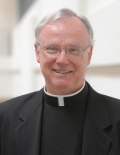 Donald Senior, C.P.
President Emeritus, Chancellor, Professor of New Testament Studies
Donald Senior, C.P., holds a Licentiate in theology (S.T.L.) from the University of Louvain, Belgium and a Doctorate in New Testament Studies (S.T.D.) from the University of Louvain. He has pursued further graduate studies at Hebrew Union College, Cincinnati, Ohio and at Harvard University. Fr. Senior served as President of CTU for 23 years, retiring in July 2013. On April 27, 2015, he was named Chancellor by the CTU Board of Trustees.
A frequent lecturer across the country, Fr. Senior also serves on numerous boards and commissions. He is past President of the Association of Theological Schools of the United States and Canada. In 2001, Pope John Paul II appointed him as a member of the Pontifical Biblical Commission and was reappointed in 2006 and 2008 by Pope Benedict XVI. He has been active in interreligious dialogue, particularly with the Jewish and Muslim communities.
Fr. Senior is the General Editor of The Bible Today and co-editor of the twenty-two volume international commentary series New Testament Message. He is the General Editor of The Catholic Study Bible (Oxford University Press, 1990). He has authored and edited several books and articles.
Donald Senior is a member of the following professional associations: The Catholic Biblical Association of America; The Society of Biblical Literature; Studiorum Novi Testamenti Societas; The Chicago Society of Biblical Research; The Catholic Theological Society of America; The International Association of Missiological Studies; Pax Christi International.
He has served as an official representative to the Southern Baptist/Roman Catholic Scholars Dialogue, sponsored jointly by the National Conference of Catholic Bishops and the Southern Baptist Convention. Fr. Senior just recently ended his term as President of the Association of Theological Schools of the United States and Canada. He is a member of the Board of Directors for Sadlier Publishing Company; the Board of Advisors of the Auburn Center for Theological Education; and the Advisory Committee of the Henry Luce III Fellowship program; and serves on the Executive Committee of the Association of Theological Schools of the United States and Canada. In 1994 he was awarded the Jerome Award for outstanding scholarship by the Catholic Library Association of America. In 1996, the National Catholic Education Association awarded him the Bishop Loras Lane Award for his outstanding contribution to theological education. He is a past President of the Catholic Biblical Association of America (1997-98).