
Don't you wonder what really happened?


Scripture Reflection for Pentecost Sunday (May 19, 2013)
Scripture Readings:
Acts 2:1-11
Psalm 104
1 Corinthians 12:3b-7, 12-13 or Romans 8:8-17
John 20:19-23 or John 14:15-16, 23b-26
So many stories in the Bible recount the wondrous working of God. In some of them, the events are reported in such unremarkable ways that one wonders whether or not anything exceptional really happened. An example of this might be God's revelation to the prophet Elijah in a tiny whispering voice (1 Kgs 19:12) or Jesus changing the bread and wine into his body and blood (Mark 14:22-24). Other stories are replete with astonishing natural phenomena like the thunder, lightning, and smoke that accompanied the revelation of God at Sinai (Exod 19:16-19), or Jesus transfiguration on the mountain with Elijah and Moses (Luke 9:28-36). The Pentecost event belongs to this second group.
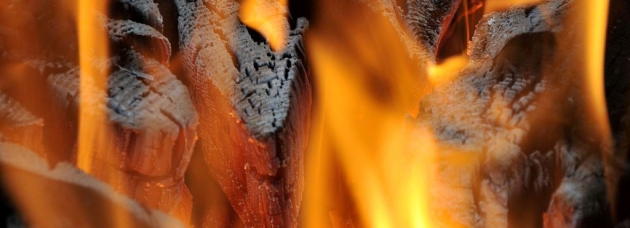
The first reading for this feast describes an extraordinary event. There is a great noise, like that produced by a hurricane. Then tongues of fire appear over the heads of the followers of Jesus. The noise and the fire are what were heard and seen, but what really happened? The reading says that they were all filled with the Holy Spirit. But what does that mean? We are told that the disciples were then able to speak in such a way that those present from all over the world could understand them in their own native language. But does this answer satisfy our questioning?
The reading tells us what happened. The disciples announced the good news of salvation as the Spirit enabled them to proclaim. We, children of the scientific age, are interested in the mechanics of the event: Did it really happen as described? Was there an actual noise? Genuine tongues of fire? And how could they speak in one language and be understood in another? None of these questions is as important as the one that is often omitted: What does it mean to be filled with the Holy Spirit?
Both the gospel and the reading from Corinthians provide us with examples of this mysterious phenomenon. Put simply, it means that the followers of Jesus were given the power promised by Jesus to further the reign of God that he had inaugurated. The gospel tells us that the disciples received the Spirit so that they would be able to exercise judgment within the community. Forgiving and holding back forgiveness of sin is a way of expressing complete jurisdiction. It is a way of suggesting totality, like flesh and blood, or east and west, or left and right. Having received the Holy Spirit, the disciples are given authority within the community.
The second reading, a passage from Paul, offers a more extensive portrait of what it meant to be filled with the Spirit. First, it was the power of the Spirit that enabled believers to acknowledge publicly their religious allegiance: Jesus is Lord! This was not only a religious profession; it was also a political proclamation. It meant: I choose Jesus, not the emperor. How many of us are able to stand up for religious values in the face of social or political opposition? The power of the Spirit enables believers to do so.
Paul goes on to speak of the gift (chárisma) that each one has been given as a manifestation of the Spirit. In this passage he does not explicitly identify these gifts, for his focus seems to be on the unity that is possible in such diversity. This is clear from his reference to the many parts making up one body. We have different gifts, different forms of service, and different workings or expressions of power. However, they are all manifestations of the same Spirit given to us for the benefit of the entire body.
So what happened on that first Pentecost, and what does it all mean for us today? The Spirit of God took hold of the first disciples with a force like a mighty wind, and they were set on fire with zeal for the reign of God. As baptized and confirmed Christians, we too have been seized by that same Spirit; we too have been given gifts meant for the service of others.
Pentecost is not simply the birthday of the church. It is more than that. It is the feast that calls us out from behind the locked doors where, like the disciples in the gospel reading, we may be hiding for fear of others. It is the feast which reminds us that we are indeed people filled with the Spirit, people with gifts that the world needs so desperately - wisdom for a world searching for meaning; knowledge for a world seeking insight; healing for a world torn apart by violence; prophecy for a world in need of direction; discernment of spirits for a world confronted by competing forces.
The power of the Spirit worked wonders in and through the lives of the first disciples; the power of the Spirit has worked wonders in and through the lives of believers down through the ages. What wonders will the Spirit work in and through us today? Don't you wonder what will really happen?
This reflection was originally published at www.ctu.edu. © Copyright 2013 Catholic Theological Union. All Rights Reserved
Image: "Schwedenfeuer" by Friedrich Böhringer - This file is licensed under the Creative Commons Attribution-Share Alike 3.0 Austria license. Source: Wikimedia Commons.
 Dianne Bergant, C.S.A.