- About Us
- Young Adult Conference
- Partners
- Reflections
- Online retreat
- Podcasts & videos
- Links
- Partner Benefits
- Alums
- Bring the Good News
- Everyone Loves A Wedding
- Light Brings Joy
- What is Cathlics on Call? A Perspective from a Recent Participant
All Are Welcome?
by Dianne Bergant, C.S.A. | May 20, 2011
Scripture Reflection for the Fifth Sunday of Easter (May 22, 2011)
Acts 6:1-7
Psalm 33
1 Peter 2:4-9
John 14:1-12
There is something very disconcerting about being accosted by someone who challenges you with the question: Have you been saved? This question is not as innocent or caring as it might at first seem, because it frequently means: Are you committed to God in the same way I am? In such instances, the question seems more an accusation than a sincere query. It implies that there is only one authentic manner of commitment, and all others are fraudulent.
In today’s gospel, Jesus assures us that there are many dwelling places in the heavenly mansion. In other words, there is room for everyone. Since each person is a unique creation of God, there will also be a uniqueness to each one’s search for and encounter with God. This is meant not to enshrine every idiosyncrasy and regard it as akin to spirituality, but to acknowledge the diversity of valid spiritual searches.
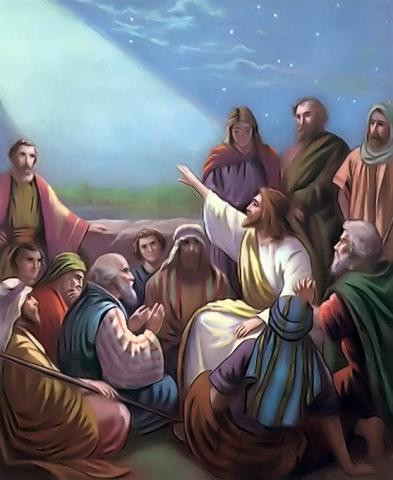
The gospel points out the confusion of the disciples. They are troubled that Jesus will leave them. He reassures them that he is merely going away to prepare a place where they will ultimately join him. Thomas' response shows that he knows neither where Jesus is going nor how the others will follow him. To this Jesus replies: "I am the way and the truth and the life." Philip misunderstands Jesus' claim that no one can come to his Father except through him, to which Jesus responds: "I am in the Father and the Father is in me."
The other hand, the claim that "No one comes to the Father except through me" has sometimes caused religious antagonism, sometimes even resulting in bloodshed. How are we to understand this statement in the face of contemporary interfaith dialogue? The Vatican II document Nostra Aetate provides the beginning of an answer to this question: "The Catholic Church rejects nothing of what is true and holy in these religions [Judaism, Islam, Buddhism, etc.]. It has a high regard for the manner of life and conduct, the precepts and doctrines which, although differing in many ways from its own teaching, nevertheless often reflect a ray of that truth which enlightens all men and women."
This is only the beginning of an answer, for we still struggle to reconcile acceptance and respect for other religious faiths with our own belief that Jesus is the way to the Father. The Council document offers some direction in the midst of this struggle. "The church, therefore, urges its sons and daughters to enter with prudence and charity into discussion and collaboration with members of other religions. Let Christians, while witnessing to their own faith and way of life, acknowledge, preserve, and encourage the spiritual and moral truths found among non-Christians, together with their social life and culture."
We see in this document, that the church summons us to discussion, collaboration, and witness of life as ways of dealing with the diversity among the religions of the world. Today's first reading offers an example of employing these means within the church itself. A conflict between Hellenist and Jewish Christians was resolved in a way that "was acceptable to the whole community." This conflict was ethnic in origin, not unlike many conflicts we face in the church today. Diversity is inevitable, and it sometimes results in disagreements. When this happens, the challenge is to address our differences honestly and to seek ways of resolving the disagreements with the kind of reverence exhorted by the church as seen in the Vatican document.
Jesus said that there are many dwelling places in the heavenly mansion. Since it is God’s mansion and not ours, we have no right to presume that some will be admitted and others will not. This is in God’s hands. All we can do is follow Jesus, and continue in our struggle to understand the teachings he left us and their implications for our lives today.
These reflections first appeared in America magazine and can now be found in THE WORD FOR EVERY SEASON (Paulist).
Image by: Free Christ Images
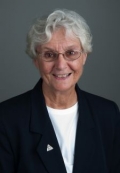 Dianne Bergant, C.S.A.
Dianne Bergant, C.S.A. is Professor of Biblical Studies at Catholic Theological Union in Chicago. She holds a BS in Elementary Education from Marian College, Fond du Lac, WI; an MA and PhD in Biblical Languages and Literature from St. Louis University.
Dianne Bergant was President of the Catholic Biblical Association of America (2000-1) and has been an active member of the Chicago Catholic/Jewish Scholars Dialogue for the past twenty years. For more than fifteen years, she was the Old Testament book reviewer of The Bible Today. Bergant was a member of the editorial board of that magazine for twenty-five years, five of those years she served as the magazine’s general editor. She is now on the editorial board of Biblical Theology Bulletin, and Chicago Studies. From 2002 through 2005, Bergant wrote the weekly column "The Word" for America magazine. She is currently working in the areas of biblical interpretation and biblical theology, particularly issues of peace, ecology, and feminism.
Tweet